The Thames Sailing Barge
I count myself very lucky that while living in Faversham I was able to sail, race, and holiday on the Thames Sailing Barge, ‘Portlight’. There must be many who have never heard of or seen these incredible vessels, let alone realise that they are raced – and have been since 1865.
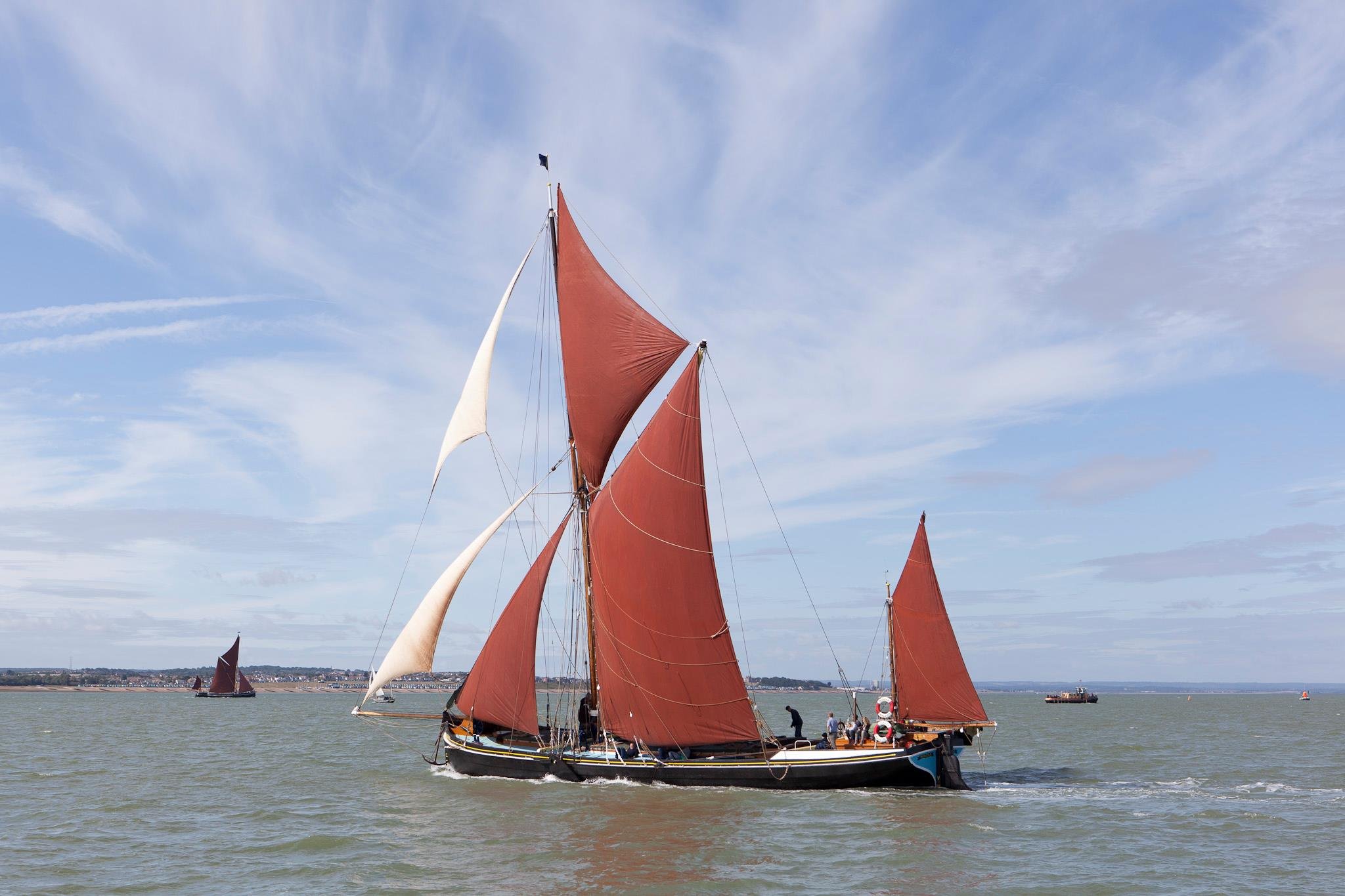
The role of the sailing barge was like the heavy goods vehicle of today. Before the arrival of motor vehicles and decent roads the carriage of bulk cargoes was a real challenge. The sailing barges shuttled loads of around 100 tons each between London and small tidal creeks all around the coast. Typically crewed by a master and mate (sometimes with a boy) they were a lot ‘greener’ than today’s fleets of lorries. In the Victorian era there were thousands of them carrying every type of bulk produce – stone, bricks, timber, straw, hay, wheat, sand, manure, and more.
The last Thames sailing barge was built in 1932, and while some were fitted with engines, the last trading under sail alone was in 1962. However a dozen or more are still out there sailing, this time chartering with passengers. Racing was introduced in 1865 as a way of improving the design, and amazingly the races continue. The prize for first across the start line is almost as sought after as the first past the finish line, and to see these huge vessels jockeying for position is quite an experience. In a stiff breeze they have a remarkable turn of speed and the power developed by a sail area the same size as a tennis court can be quite scary.
